


I’m probably in the minority that actually finds writing qualitative reports and presenting findings for our research partners through the written form one of the fun aspects of being a Qualitative Researcher. In today’s blog, I’m sharing three dos and three don’ts RIVA teaches for writing qualitative reports.
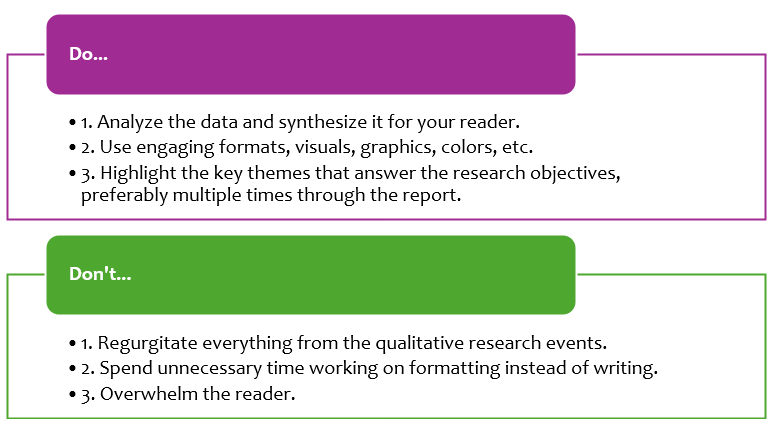
But what does this REALLY mean?
- Do analyze the data and synthesize it for your reader. –> Don’t regurgitate everything from the qualitative research events.
If your research partner wants to know everything that happened in the qualitative research events, they’ll either attend the sessions, watch the video, or read the transcripts. Your job is to synthesize the data: what does what they say actually mean? In your presentation of findings – both written and oral, if necessary – your role is to help explain where Respondents’ POBAs on the topic netted out and what it means going forward. If you’re hired to provide consultancy, you should also present what they should do with the findings.
- Use engaging formats, visuals, graphics, colors, etc. –> Don’t spend unnecessary time on formatting instead of writing.
These seem contradictory, but I promise, they aren’t. One of the best ways to write a report, to get started, is to practice writing forward. This means writing without focusing on how things look on the screen, how it comes out, and without self-editing. Getting the words on the page is the goal. Then, when you’ve got something to work with, edit and focus on how it looks, aka making it visually appealing or prettier.
- Highlight the key themes that answer the research objectives, preferably multiple times through the report. –> Don’t overwhelm the reader.
Overwhelming your reader, whether it’s with information or data on a page/slide, will prove detrimental. You should focus on highlighting key themes early in the report, walking through what each key theme means and what questions the data answers, and close by restating the key findings. Our Trainer, Bob, calls this: “Tell them what you’re going to tell them (Executive Summary), tell them (Detailed Findings), and tell them what you told them (Summary).”
Following these three dos and don’ts will already set you up for success in writing your qualitative reports.
Written by: Brittany Mohammed